

The Keltner List is a series of subjective questions formulated by famed sabermetrician Bill James used to help assess whether or not a player should be elected to the National Baseball Hall of Fame.
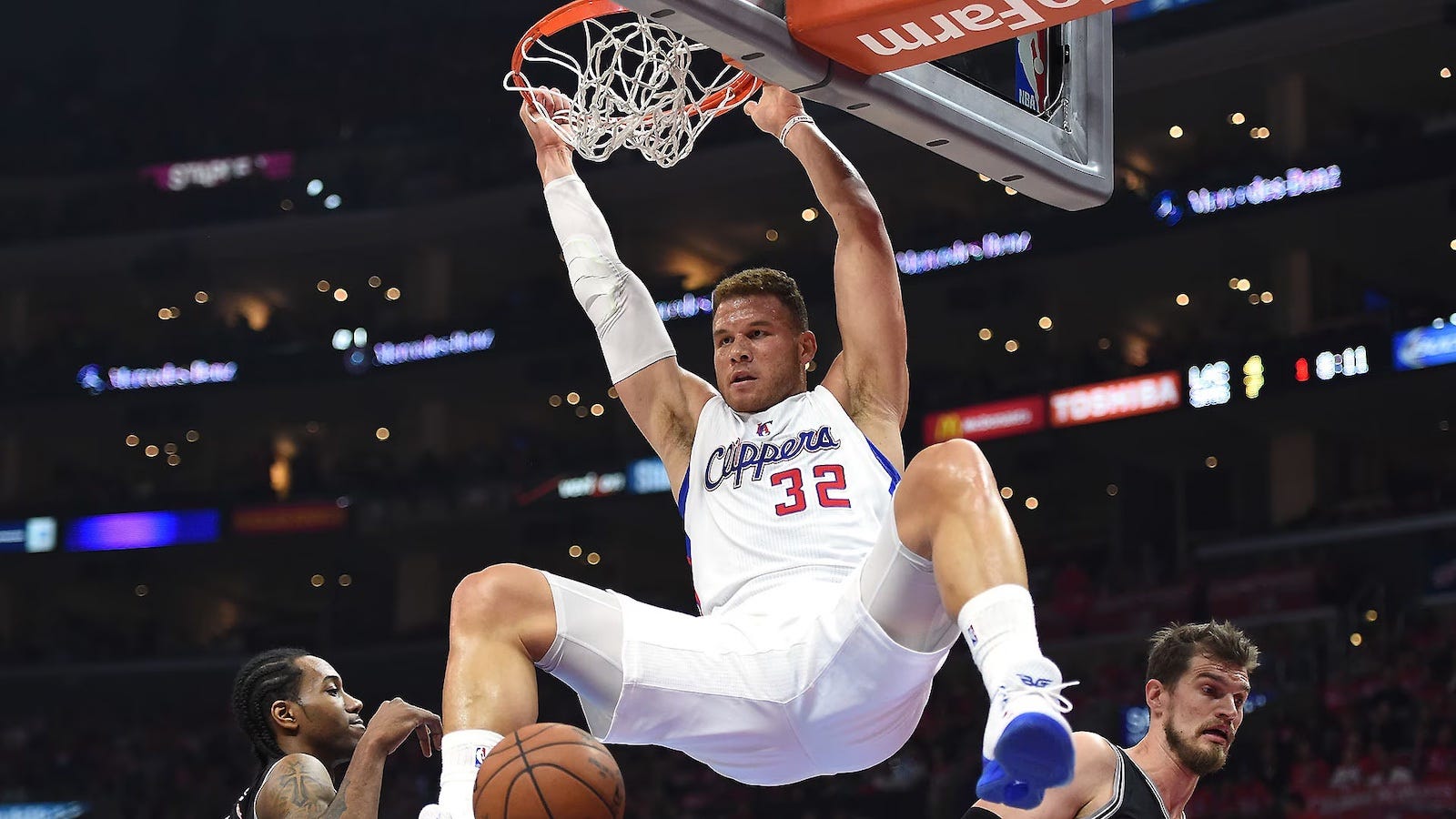
Although the system was designed to evaluate baseball players, with a few minor tweaks it can also be used to assess the Hall-worthiness of basketball players. In this post, I will examine the recently-retired Blake Griffin’s case for the Basketball Hall of Fame.
Was he ever regarded as the best player in basketball? Did anybody, while he was active, ever suggest that he was the best player in basketball?
No on both counts.
Was he the best player on his team?
Griffin was the LA Clippers’ best player in 2010-11, his debut season in which he was named the NBA’s Rookie of the Year. However, the Clippers acquired All-NBA point point guard Chris Paul in the offseason, and from that point forward it was pretty clear that Paul was the team’s best player.
Was he the best player in basketball at his position?
Griffin was a five-time All-NBA selection but did not make a First Team, so I think it’s fair to say he was never considered the best forward in the game. If we’re specifically talking about power forwards, then I think there’s a season or two in which Griffin could lay claim to being the best player at his position.
Did he have an impact on a number of NBA Finals or conference finals?
No, only one of his teams advanced past the conference semifinals, and that was the 2022-23 Boston Celtics in Griffin’s final season. However, Griffin played just six minutes that postseason, and did not appear in a single Eastern Conference Finals game.
Was he good enough that he could play regularly after passing his prime?
I believe he would have been, had his body not let him down. Griffin earned his final All-Star and All-NBA selections with the Detroit Pistons in 2018-19, his age-29 season. After that, though, injuries gradually brought Griffin’s career to a premature end. Over his last four seasons, he played in just 161 of a possible 302 games (53.3%), averaging 20.0 MPG.
Is he the very best (eligible) basketball player in history who is not in the Hall of Fame?
No, I don’t think that he is. My choice for that somewhat-dubious honor would be Kevin Johnson.
Are most players who have comparable statistics in the Hall of Fame?
There are any number of ways one could attempt to answer this question. Here’s the approach I used:
Take Griffin’s top 10 seasons based on individualized wins*.
Order them from highest to lowest.
Repeat this for all eligible players and find the 10 players with the most similar pattern to Griffin (note that the word “similar” here refers to value, not style of play).
* This is my replacement for another statistic I created, win shares.
Here are those players, in order of similarity:
Alex English (HOF)
Chris Webber (HOF)
Marques Johnson
Wes Unseld (HOF)
Alonzo Mourning (HOF)
Shawn Kemp
Manu Ginobili (HOF)
Rick Barry (HOF)
Scottie Pippen (HOF)
Kevin Johnson
This list includes seven Hall of Famers and three strong candidates, two of whom I’ve written about previously (Marques Johnson and Kevin Johnson). While this does not make Griffin a no-doubt-about-it choice, it suggests his election would not make him an outlier (far from it, actually).
Do the player’s numbers meet Hall of Fame standards?
Griffin’s Hall of Fame Probability is 54.8%, which is a respectable figure. If you look at the five eligible players directly above and below him, you’ll find all 10 are Hall of Famers.
Griffin’s Hall of Fame standards score is 49, which puts him at the top of the “strong candidate” range. He’s tied with Amar’e Stoudemire for first place among all eligible non-Hall of Famers by this measure, although Griffin himself is not yet eligible.
Note that both of the measures used above are based on past voting tendencies. In other words, they don’t necessarily reflect who should be elected to the Hall of Fame, but rather who will be.
Is there any evidence to suggest that the player was significantly better or worse than is suggested by his statistics?
Not really. Traditional statistics are inadequate, at best, for evaluating defense, but Griffin was not noted for his abilities on that end of the floor.
Is he the best player at his position who is eligible for the Hall of Fame?
There are a lot of good candidates at power forward: Elton Brand, Amar’e Stoudemire (unless you consider him a center), Horace Grant, Larry Nance, and Shawn Kemp, just to name five. Is Griffin the best of that bunch? I’m inclined to say that he is.
How many MVP-type seasons did he have? Did he ever win an MVP award? If not, how many times was he close?
Griffin’s best finish in the MVP Award voting came in the 2013-14 season, when he placed third (but did not get a first-place vote). He also received a single third-place vote in 2010-11 and a single fourth-place vote in 2014-15.
How many All-Star-type seasons did he have? How many All-Star games did he play in? Did most of the players who played in this many All-Star games go into the Hall of Fame?
Griffin was a six-time All-Star selection. There are 25 other players who have earned exactly six All-Star nods, 20 of whom are eligible for the Hall of Fame. Sixteen of those players (80%) are Hall of Famers. The exceptions are Larry Costello (inducted as a contributor), Shawn Kemp, Jermaine O’Neal, and Amar’e Stoudemire.
I sometimes define an “All-Star-type” season as one in which a player records a PER of 20.0 or higher while playing at least 50% of all possible minutes (about 2,000 minutes in an 82-game season). Griffin had seven such seasons, a total matched by seven other eligible players: Clyde Drexler, George Gervin, Artis Gilmore, Dan Issel, Alonzo Mourning, and Robert Parish. All seven of those players have been elected to the Hall of Fame.
If this man were the best player on his team, would it be likely that the team could win an NBA title?
Griffin was the best or second-best player on numerous teams, and none of them advanced past the conference semifinals. So no, a team with Griffin as its best player would not be a likely title winner.
What impact did the player have on basketball history? Was he responsible for any rule changes? Did he introduce any new equipment? Did he change the game in any way? Was his college and/or international career especially noteworthy?
Griffin was the NCAA’s consensus player of the year at Oklahoma in 2008-09, taking home all six major awards. He was also the winner of the NBA’s Slam Dunk Contest in 2011.
The Verdict
The end of Griffin’s career was not pretty, but that was due to injuries. He was a six-time All-Star and five-time All-NBA selection before his age-30 season. How much would another All-Star or All-NBA selection really move the needle?
Granted, I’m more of a “Big Hall” guy than a “Small Hall” guy, but when you look back at the questions above you’ll find that Griffin is surrounded by Hall of Famers in comparisons both quantitative (i.e., statistical) and qualitative (i.e., awards and honors). I think he’s earned a spot alongside those players.