


As I’ve written before, I sometimes define an “All-Star-type” season as one in which a player records a Player Efficiency Rating (PER) of 20 or higher while playing at least 50% of all possible minutes (about 2,000 minutes in an 82-game season).
Why do I use those cutoffs? Because in a typical season (at least since the NBA expanded to 30 teams for the 2004-05 season), about 24 players will reach those marks. In other words, enough players to form two 12-man All-Star teams.
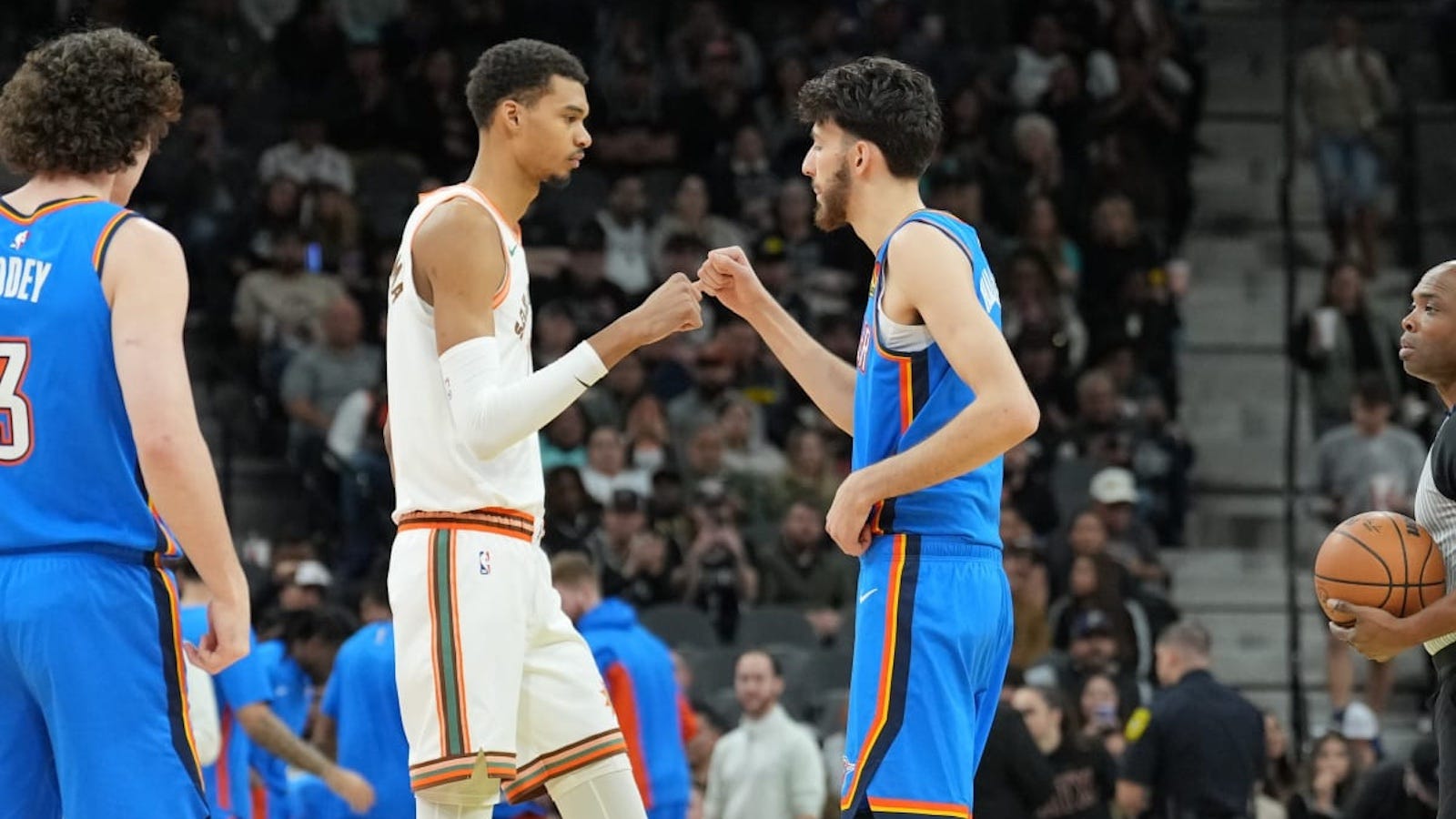
Last season, two rookies — Victor Wembanyama and Chet Holmgren — produced an “All-Star-type” season. It’s just the sixth time multiple rookies have done so in the same campaign:
Walter Davis & Marques Johnson, 1977-78
Magic Johnson & Larry Bird, 1979-80
Terry Cummings & Clark Kellogg, 1982-83
Michael Jordan & Hakeem Olajuwon, 1984-85
Shaquille O'Neal & Alonzo Mourning, 1992-93
Victor Wembanyama & Chet Holmgren, 2023-24
Since the NBA began tracking minutes played in 1951-52, there have been a total of 36 such seasons by rookies. I might as well list the rest of them:
Ray Felix, 1953-54
Bob Pettit, 1954-55
Maurice Stokes, 1955-56
Elgin Baylor, 1958-59
Wilt Chamberlain, 1959-60
Oscar Robertson, 1960-61
Walt Bellamy, 1961-62
Terry Dischinger, 1962-63
Rick Barry, 1965-66
Kareem Abdul-Jabbar, 1969-70
Bob Lanier, 1970-71
John Drew, 1974-75
Alvan Adams, 1975-76
Ralph Sampson, 1983-84
David Robinson, 1989-90
Chris Webber, 1993-94
Tim Duncan, 1997-98
Elton Brand, 1999-00
Yao Ming, 2002-03
Chris Paul, 2005-06
Blake Griffin, 2010-11
Karl-Anthony Towns, 2015-16
Ben Simmons, 2017-18
Deandre Ayton, 2018-19
This is an impressive group. Setting Wembanyama and Holmgren aside, we have a sample of 34 players. Here’s a summary of their accomplishments:
The median number of All-Star Game selections is 6.5. Thirteen of them (38.2%) earned double-digit All-Star nods.
The only two non-All-Stars are Clark Kellogg and Deandre Ayton (more on Kellogg below).
Eleven of these players (32.4%) went on to win at least one MVP Award, with seven of them (20.6%) claiming the honor multiple times.
Twenty-nine of these players are eligible for the Hall of Fame; 21 of them (72.4%) have been elected. The non-Hall of Famers are Alvan Adams, Elton Brand, Terry Cummings, Terry Dischinger, John Drew, Ray Felix, Marques Johnson, and Kellogg.
Six of the eight non-Hall of Famers had extenuating circumstances that either derailed promising starts or brought their careers to a premature end:
Brand averaged 20.3 PPG and 10.2 RPG through his first eight seasons, but ruptured his left Achilles tendon in August 2007. Even though he played an additional nine seasons after the injury, he was never the same player.
Cummings had career averages of 21.3 PPG and 8.7 RPG through 10 seasons, but suffered a serious knee injury in the summer of 1992. Although he would spend eight more seasons in the NBA, Cummings never again averaged double figures in points.
Dischinger earned All-Star selections in each of his first three seasons. But following the 1964-65 season, his third in the NBA, Dischinger had to put his basketball career on hold in order to fulfill a military obligation (he was in the ROTC in college). Stationed in Hawaii, Dischinger spent two years serving in the U.S. Army.
Drew battled drug problems throughout his career, eventually becoming the first player to be banned from the NBA for repeated violations of the league’s substance abuse policy.
Johnson earned his fifth and final All-Star selection in 1986, but just 10 games into the following season he suffered a serious neck injury that effectively ended his playing career at the age of 30.
Kellogg played just two more full seasons after his rookie campaign, as chronic knee problems forced him to retire at the age of 25.
With Wembanyama and Holmgren abut to start their second seasons, I thought it would be interesting to look at how these players fared in the sophomore campaigns:
Twenty-six of them (76.5%) had another “All-Star-type” season.
Five of them (14.7%) met the minutes threshold but did not record a PER of 20 or higher: Dischinger (19.6 PER), Larry Bird (19.9), Cummings (19.8), Kellogg (19.1), and Ralph Sampson (17.4). As you can see, the first four players narrowly missed.
Three of them (8.8%) recorded a PER of 20 or higher but did not meet the minutes threshold: Magic Johnson (knee injury), Michael Jordan (broken foot), and Ayton (suspension).
Let’s remove Johnson, Jordan, and Ayton and focus on the 31 players who met the minutes threshold in their second season:
Eighteen of them (58.1%) posted a higher PER in their sophomore campaign. The five biggest increases belonged to Kareem Abdul-Jabbar (plus-6.47), Shaquille O’Neal (plus-5.62), Rick Barry (plus-4.15), John Drew (plus-3.93), and Karl-Anthony Towns (plus-3.41).
Thirteen of them (41.9%) posted a lower PER in their sophomore campaign. The five biggest decreases belonged to Cummings (minus-3.04), Sampson (minus-2.73), Ray Felix (minus-2.23), Maurice Stokes (minus-2.00), and Walt Bellamy (minus-1.64).
The median PER change from their rookie season to their sophomore campaign was plus-0.58 (i.e., their PER was 0.58 higher in their second season).
Twenty-two of these players (71.0%) were selected to the All-Star Game in their second season, while 17 of them (54.8%) earned All-NBA recognition. Two of them — Bob Pettit and Kareem Abdul-Jabbar — won the MVP Award.
Now, I realize there’s nothing earth shattering in this post. It just shows what most people would expect: really good rookies tend to be really good as sophomores, and tend to have really good careers. If you’re a fan in San Antonio or Oklahoma City, you should have a lot to look forward to.